A new demonstration, planned around the task.
We define and record a focused workflow with suitable views, task instructions, outcomes, and agreed data rights.
Manort Simulator Engine
Start with your site, your task demonstrations, or both. Manort creates a physics-ready environment, structures real-world task data, and prepares training and validation workflows for Milo or a compatible customer robot.
Collision, dynamics, and task training run in Manort Simulator Engine.
Loading environment
Manort Task Data · Real to sim
We can capture a defined task with your team or start with suitable data you already control. Actions, objects, outcomes, and the physical environment are connected so the demonstration can support simulation and robot training.
We define and record a focused workflow with suitable views, task instructions, outcomes, and agreed data rights.
Provide rights-cleared video, depth recordings, teleoperation sessions, robot logs, CAD, or site layouts for a technical and rights review.
Why simulation comes first
A robot cannot learn every route, reach, and handling task for the first time in a live store or warehouse. Real operations leave little room for repeated trials. A digital version of the site gives the team a place to prepare and test first.
2D to 3D
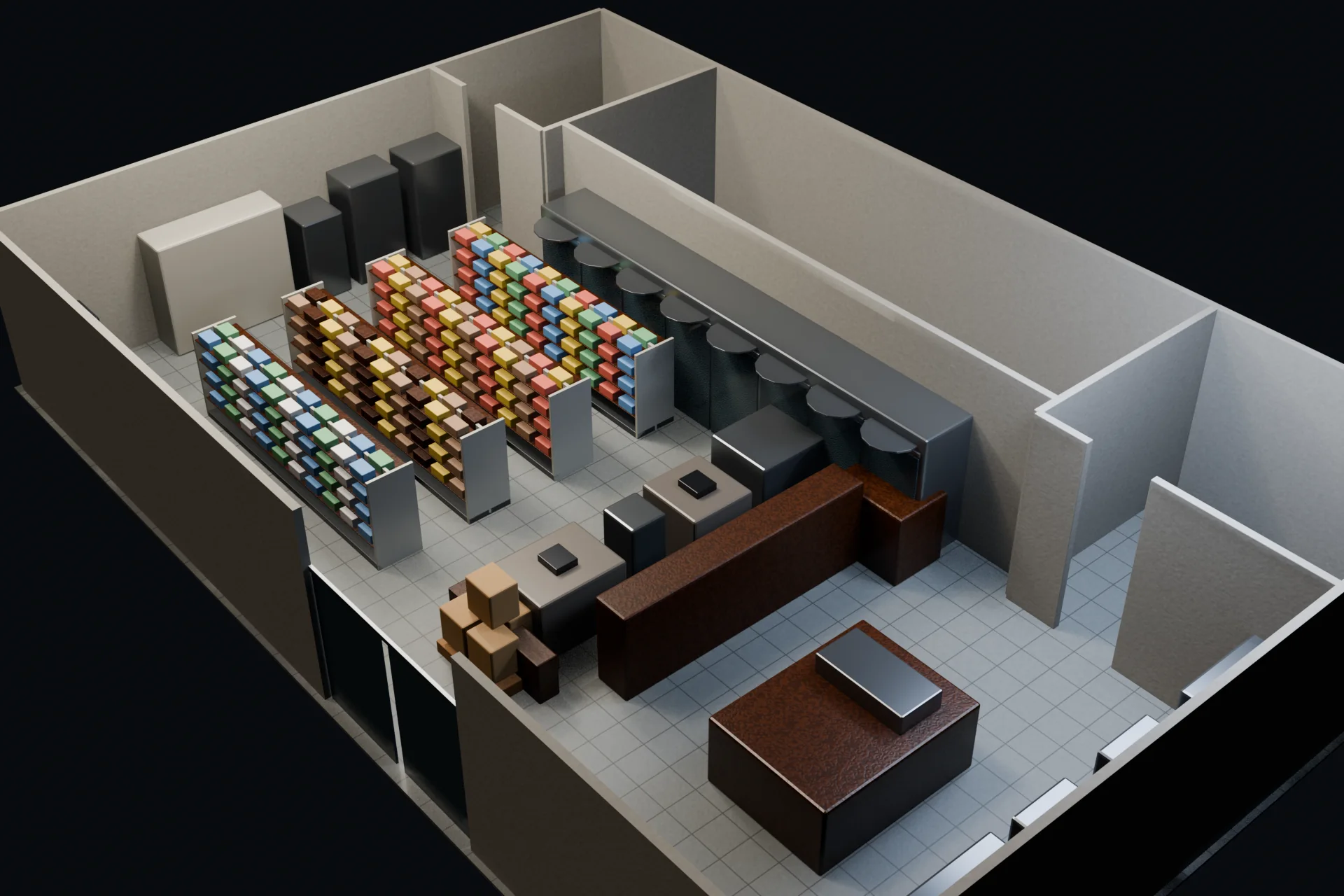
This dock and inventory layout is translated into a structured 3D site model. Scale, collision boundaries, relevant objects, and physical properties prepare the scene for route planning, manipulation, and task simulation.
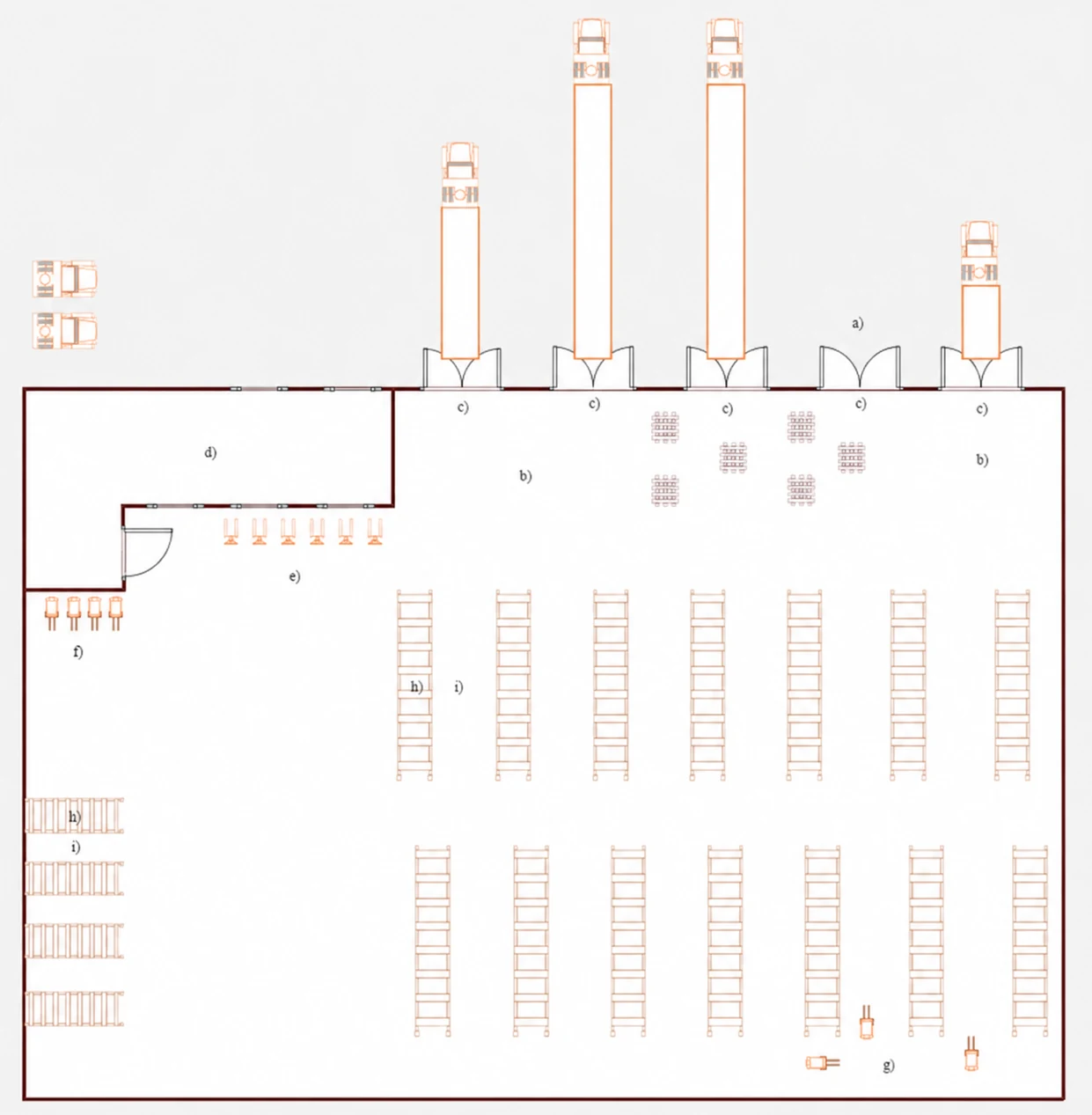
Doors, storage rows, work zones, and circulation are defined in the source layout.
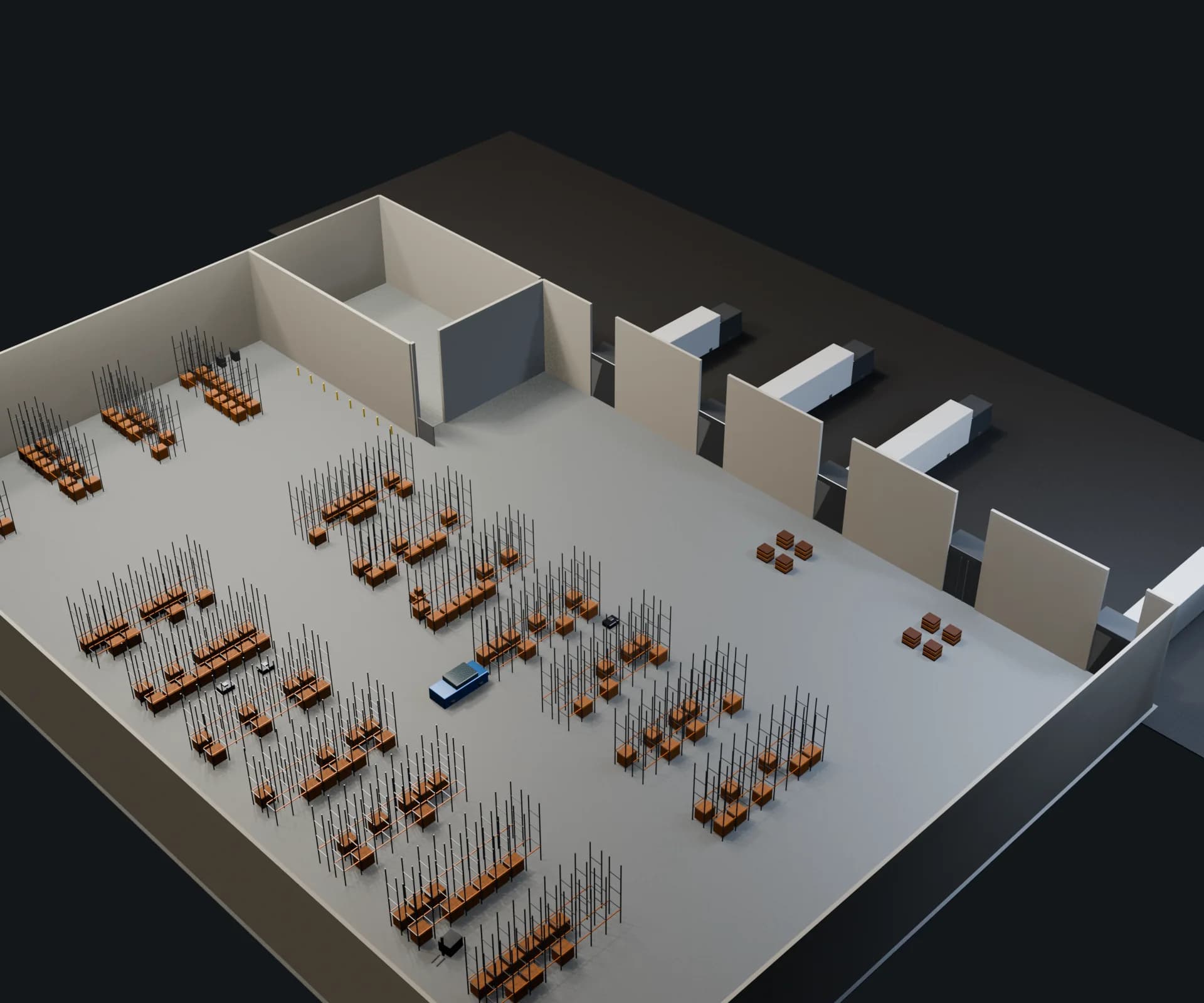
The same structure becomes a physics-ready environment for preparing robot behaviour.
Different sites, one engine
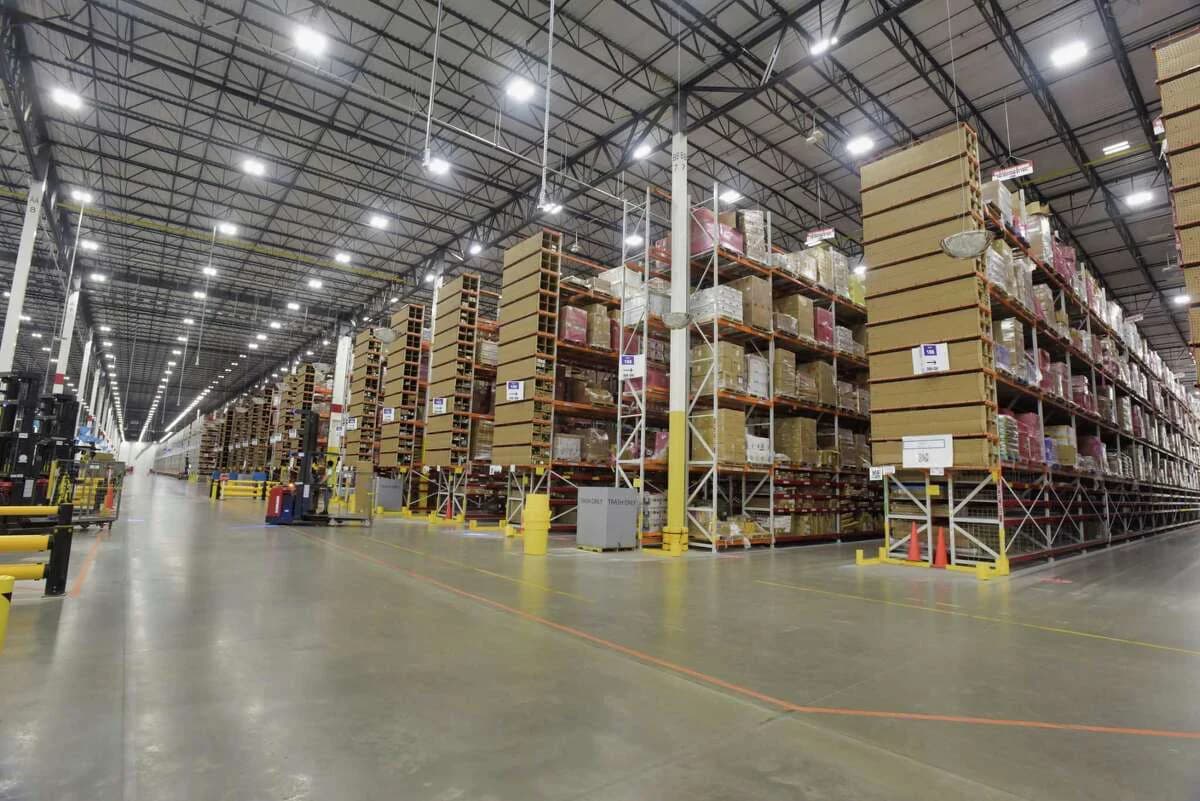
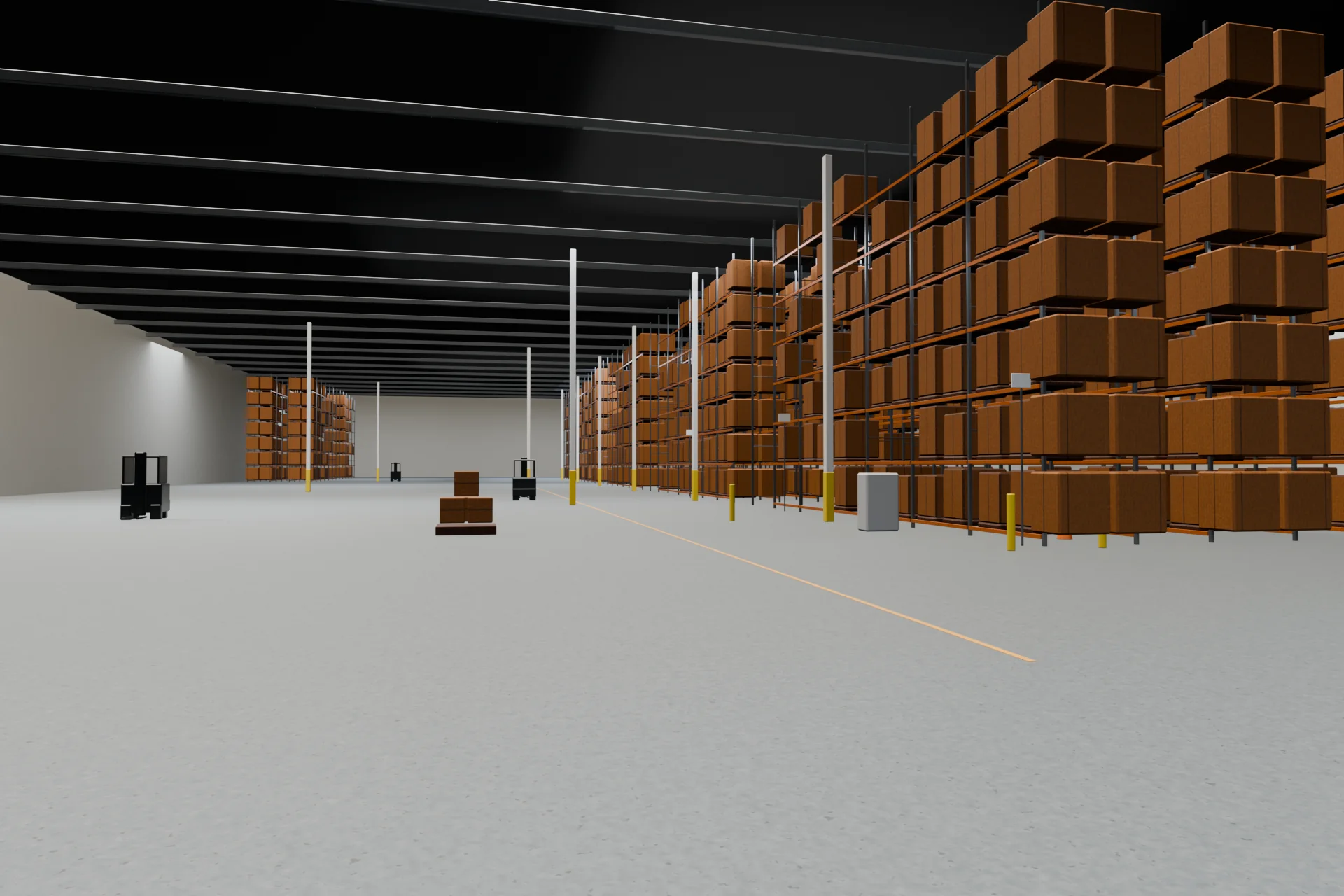
A retail floor and a warehouse ask different things of a robot. The environment should reflect the layout, objects, clearances, and operating context of each site.
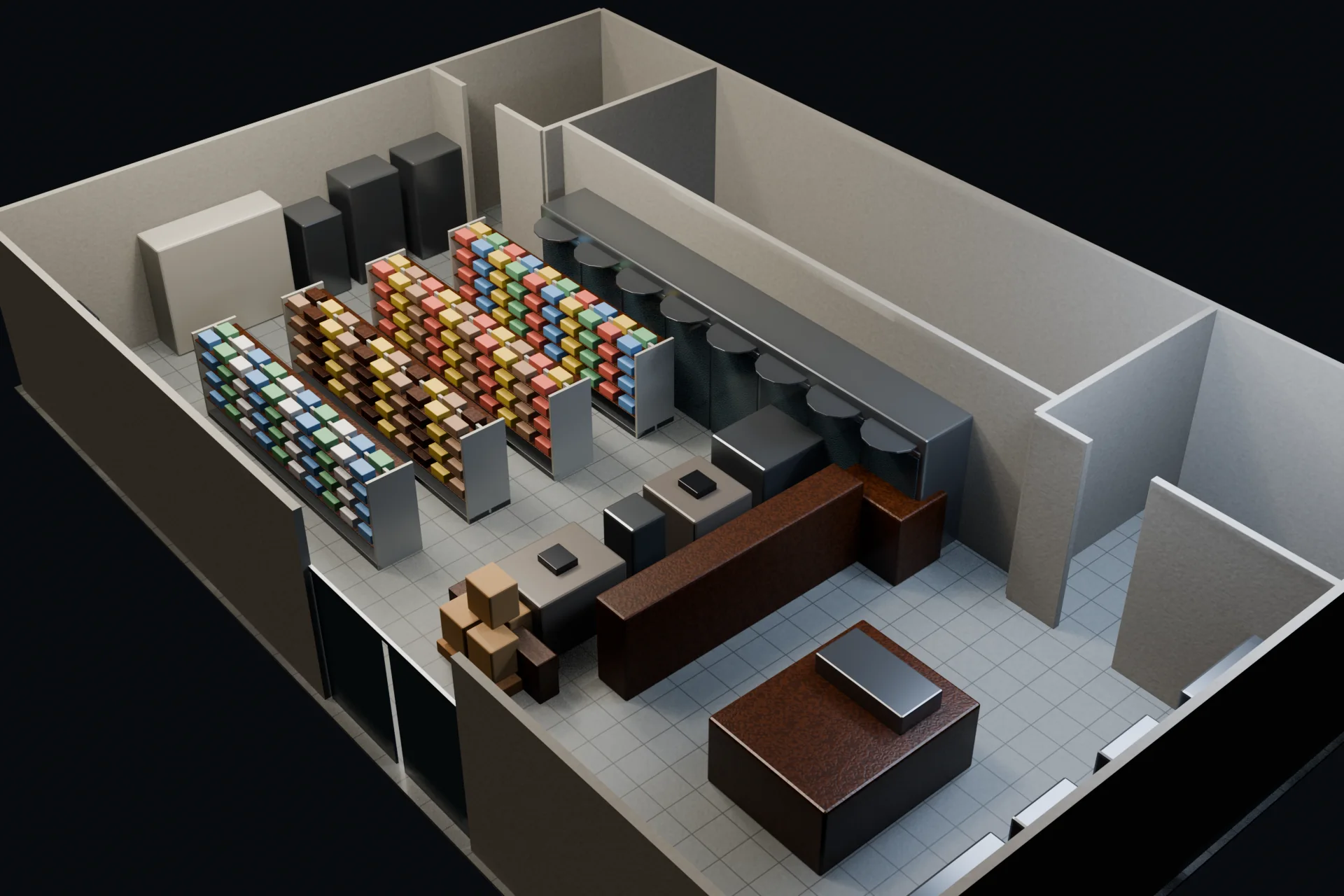
A floor plan becomes a 3D store with aisles, counters, cooling units, storage, and the spaces between them.
Warehouse structure and inventory context become a scene where routes, aisle access, and handling workflows can be prepared.
The deployment workflow
Simulation moves early iteration away from the customer floor. The goal is a clearer, more focused path from understanding the site and task to validating a real workflow.
Start with images, a floor plan, or an existing layout of the environment.
Capture a real demonstration with us or begin with suitable data you already control.
Connect the environment, task stages, actions, objects, outcomes, and controlled variations.
Refine a focused workflow for Milo or an assessed compatible robot, then test it under supervision.
Made with Milo
Manort Simulator Engine is designed and developed in-house alongside Milo. The robot, simulator, and deployment workflow can therefore evolve as one system instead of being divided between separate products and outside suppliers.
We are committed to keeping Milo's core software development inside Manort. That includes the simulation, robot intelligence, and tools that prepare Milo for each site.
Meet the team