Consumer
A grocery robot for households
For customers, Manort Milo can go to the store, collect a shopping list, transport the basket, and complete a clear bring-home handoff.
MVP Goal
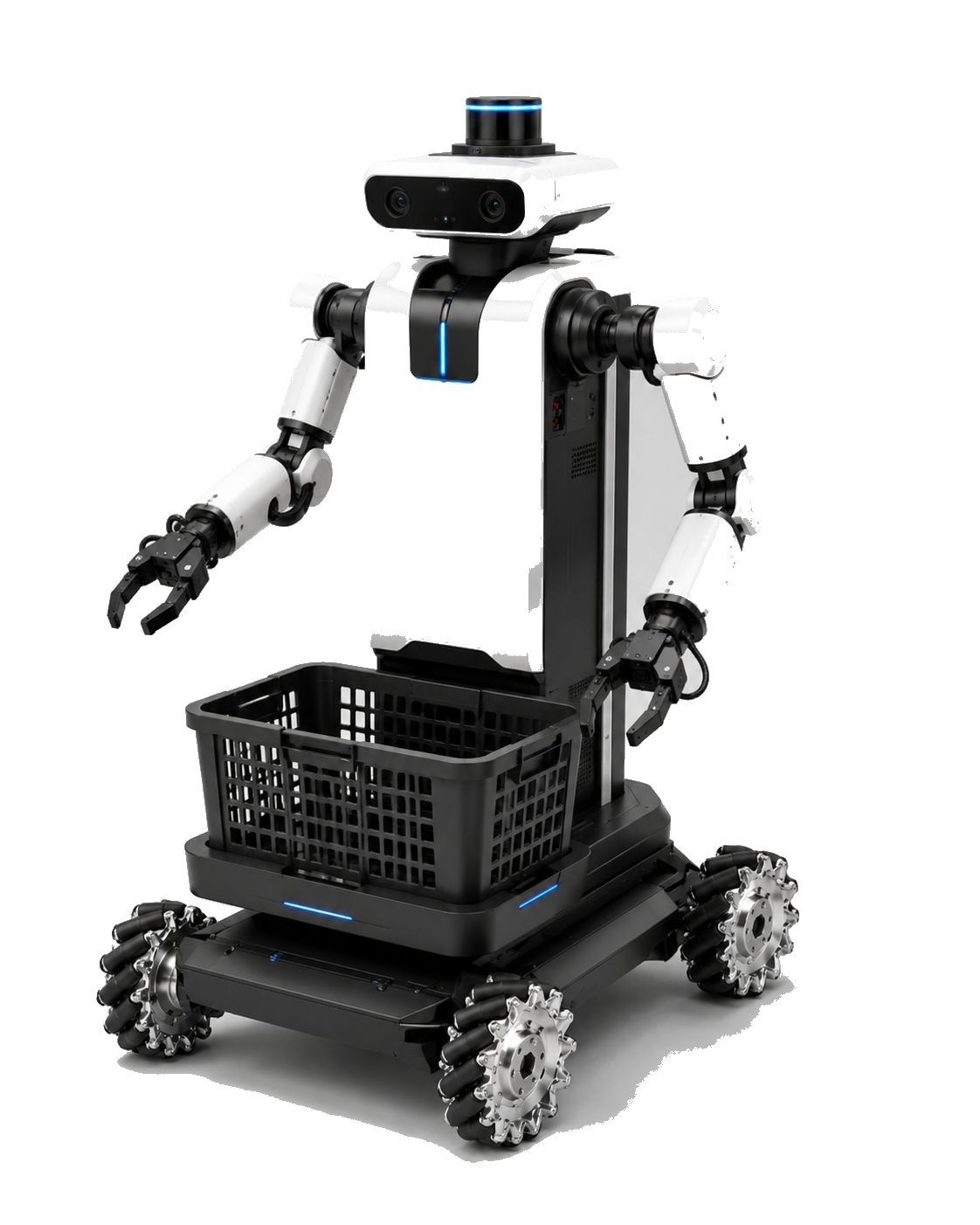
Manort Milo is the first Manort MVP, positioned in two clear ways: a household grocery robot for customers and an autonomous retail operations robot for store teams.
Mission
The better framing is not a generic robot, but one autonomy stack that can first win in consumer grocery fulfillment and retail store-floor operations.
Consumer
For customers, Manort Milo can go to the store, collect a shopping list, transport the basket, and complete a clear bring-home handoff.
Enterprise
For retail partners, the same platform can support shelf arrangement, item returns, restocking routines, expiry removal, and repetitive store-floor work.
Shared autonomy
Navigation, shelf perception, picking, basket transport, and task verification are the same technical core whether Milo serves a family or a retail chain.
Rollout
The right first step is a supervised MVP with packaged goods and structured routes, then broader store work and higher autonomy after operating proof.
System
The concept combines a stable mobile base, a front basket, compact arm reach, and perception hardware tuned for shelves, aisles, handoff zones, and repetitive store work.
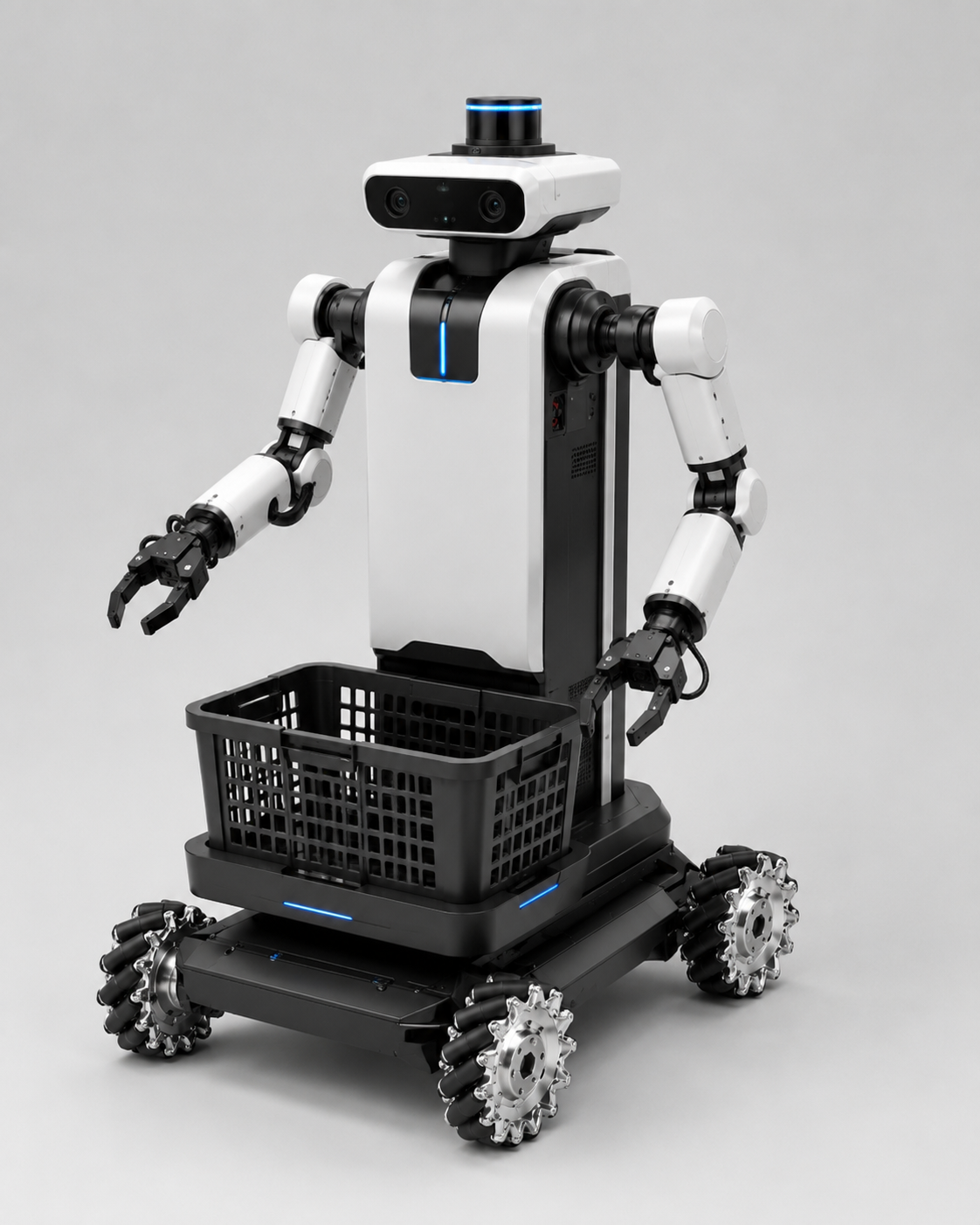
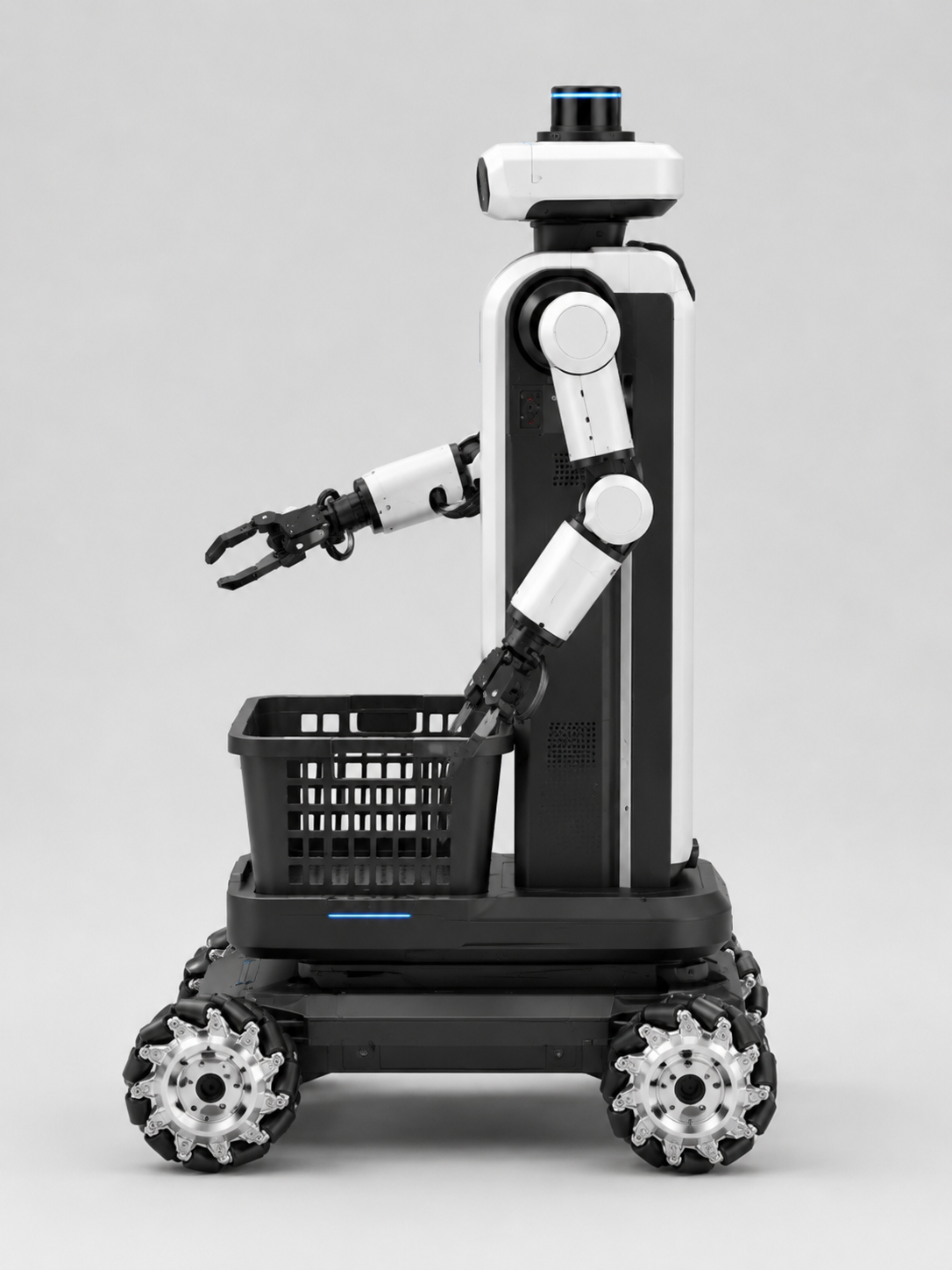
Forward vision, depth sensing, and localization tuned for shelf finding, lane following, and item confirmation.
A compact arm and gripper profile designed around repeatable grocery picks instead of open-ended domestic dexterity.
A low, stable base with a front basket so the robot can carry items while staying maneuverable in narrow store lanes.
Speed limits, supervised fallback, obstacle stops, and clear human handoff points define the first operating envelope.
Flow
The same robot can either run a customer grocery mission or carry out repeated retail tasks around shelf maintenance, item movement, and expiry handling.
Consumer loop: receive a household shopping list, navigate the store, pick packaged items, and complete a basket-based handoff for the home run.
Enterprise loop: inspect shelves, reposition misplaced products, refill assigned sections, and remove expired items during store operations.
Shared engine: use the same aisle navigation, shelf perception, arm control, and basket transport stack across both deployment modes.
Supervised deployment: keep remote oversight and exception handling in place until Milo proves stable in real customer and retail environments.
Pilot Scope
Early pilots should prove both sides of the wedge: structured consumer shopping runs and tightly scoped retail operations with strong recovery pathways.
Initial constraints
Near-term expansion